
An office garden is the first thing visitors see, and one of the few places staff choose to spend time outside. It also costs money every month to water and maintain. Good office landscaping does both jobs: it creates spaces people use, with plants and systems that are affordable to keep alive.
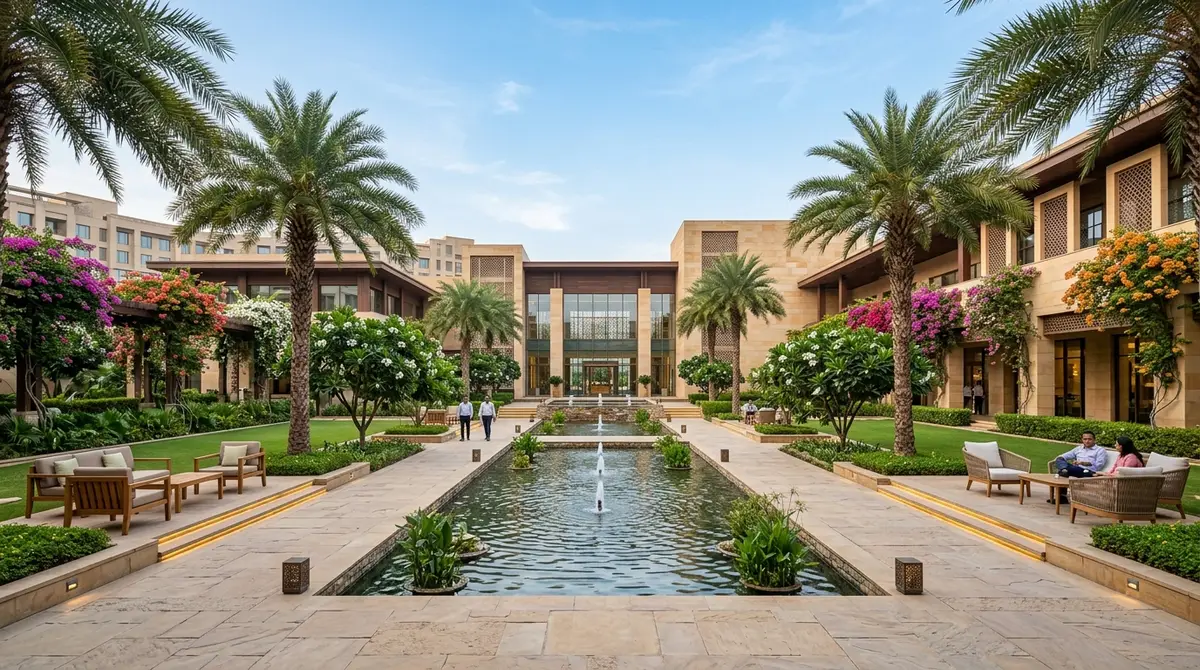
Where should an office spend on landscaping?
Spend where people are. Walk the site with your facility team and note where people move and stop: the entrance and drop-off, walkways between buildings, parking, break areas, spots where people take calls or eat lunch, and the views from desks and meeting rooms. Put the best landscaping there. Quiet edges and service areas can stay simple and cheap to maintain.
Why does shade come first?
In an Indian summer, shade is what people want most from an outdoor space. Plant shade trees over parking, along walkways and around seating. Trees take years to grow, so use pergolas and shade structures in the meantime.
How should you choose the plants?
- Choose local plants that suit the site. They need less water, fewer chemicals and fewer replacements.
- Group plants by how much water they need, so thirsty plants and dry-loving plants are not watered on the same schedule.
- Keep lawns only where people use them. Lawns need the most water. Use ground cover and shrub beds elsewhere.
- Plan for the full-grown size, so trees do not crowd buildings, hide signs or lift paving in five years.
How can you cut the water bill?
Water is the biggest running cost. Use drip irrigation for shrub beds, hedges and trees, and sprinklers on timers for lawns. If the campus has a sewage treatment plant (STP), its treated water can often be used for watering, with proper filters. Rainwater harvesting and recharge pits reduce runoff and refill groundwater. Our guide to drip irrigation for large campuses explains where each system works best.
Can an office have a terrace garden or green wall?
Yes. A terrace garden can turn an empty roof into a break-out space. It needs proper waterproofing, a root barrier, a drainage layer and light soil. Your structural engineer should confirm the roof can carry the weight before design starts. Green walls look striking in lobbies and on outside walls. But they need built-in watering and regular care, so plan a maintenance budget from the start.
Does landscaping help with green building ratings?
It can. Landscaping can earn points in green building ratings such as IGBC and GRIHA. Native planting, smaller lawns, efficient watering and shade over paved areas all count. If your building is going for a rating, bring in the landscape contractor early, so the design supports the points you want.
A design your team cannot maintain will start to fail within a year. Agree on maintenance at the design stage, not after handover.
Who looks after the garden after handover?
Decide this early. Every landscape needs regular pruning, mowing, feeding, pest control and irrigation checks. Agree who does what, how often, and how dead plants are replaced. A simple monthly report with photos keeps everyone on track.
Checklist for facility managers
- A site plan and photos of how the site looks now.
- Where people walk, park, sit and gather.
- Your water source and its quality: city supply, borewell or treated STP water.
- Roof load and waterproofing details, if terraces are included.
- Any green building rating you are aiming for.
- A budget for building the garden and for the first year of maintenance.
See our office and commercial landscaping services.
Planning an Office or Campus Landscape?
Share your site plan or location. Our landscape designer will suggest an approach and prepare an estimate.
Book a Site Visit ↗