
Watering is one of the biggest running costs of a large landscape. On many Indian campuses it is still done with hoses or by flooding. Drip and automatic irrigation can cut that cost a lot, but only when the right system goes to the right part of the site.
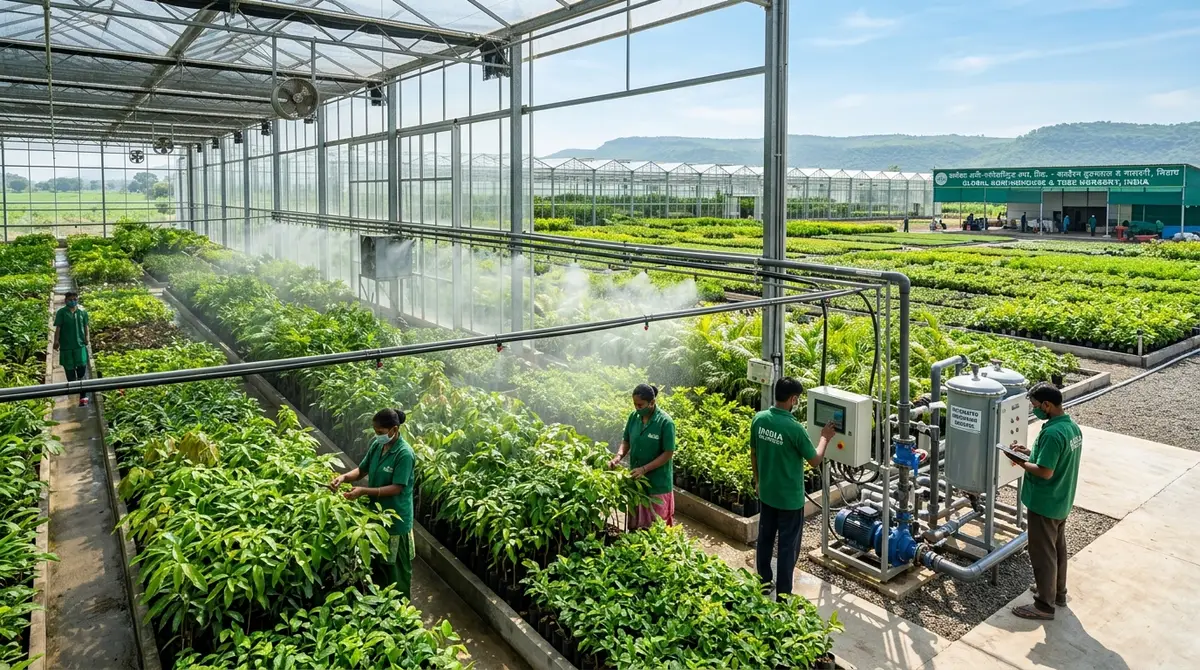
How does drip irrigation work?
A drip system gives water slowly, through small outlets (emitters) placed at each plant's roots. Very little water is lost to evaporation or runoff, so far less is wasted than with hose or flood watering. Drip also keeps leaves and paths dry, which means less disease and fewer weeds.
Where does drip work best?
- Shrub beds, hedges and ground cover.
- Trees, including rows of roadside trees and median planting.
- Terrace gardens, planters and green walls.
Where does drip not work?
Lawns and sports grounds need even water across the whole surface. Sprinklers or pop-up sprinklers on timers work better there. Most large campuses use both: drip for beds and trees, sprinklers for grass.
What is zoning, and why does it matter?
Zoning means grouping plants that need similar water, sun and soil. Each group (zone) gets its own valve and watering schedule. A shady shrub bed and a sunny lawn should never be watered on the same schedule. Good zoning is what makes an irrigation system actually save water.
Can irrigation run automatically?
Yes. A controller waters each zone on its own schedule, at times of day when less water evaporates. Rain or soil-moisture sensors can skip a watering after rain. Larger systems can be checked and changed remotely, which helps when the garden team is small.
Can drip use borewell or STP water?
Yes. City supply, borewells and treated sewage (STP) water can all feed a drip system. Treated water saves fresh water, but it carries particles that block emitters. So it needs good filters and regular flushing. Hard borewell water can leave scale in emitters and may need treatment from time to time.
Most drip systems fail because nobody looks after them, not because of bad design. Plan for filter cleaning, line flushing and emitter checks from the first month.
How do you maintain a drip system?
Clean the filters regularly, flush the pipes, check emitters for blockages, repair damage from mowing or digging, and change the schedules with the seasons. A system that is looked after keeps saving water for years.
What do we need to design your system?
- Your site and planting plan.
- Your water source, water pressure and water quality.
- Details of any existing irrigation that could be reused.
See our irrigation services, and our guide to office landscaping for how irrigation fits into the wider design.
Want to Cut Your Watering Costs?
Send us your site plan and water source details. We'll propose a zoned drip and sprinkler layout with a clear, itemised estimate.
Book a Site Visit ↗